Call Anytime
92 666 888 0000
The technological landscape of the twenty-first century is defined by the rapid ascendancy of machine intelligence. Artificial Intelligence, commonly referred to as AI, is a sophisticated field of computer science focused on developing systems capable of performing tasks that have historically required human cognitive intervention. These tasks encompass a wide array of functions, including visual perception, speech recognition, complex decision-making, and natural language translation. Within the professional sphere, AI is no longer a speculative future technology but a foundational infrastructure driving global economic paradigms. Statistics indicate that 91.5% of world-leading businesses, such as Google, General Motors, and Pfizer, have already invested heavily in these technologies to maintain competitive advantages.
At its core, Artificial Intelligence operates through the mechanism of machine learning, where algorithms identify intricate patterns within massive datasets to refine their performance over time. This process allows systems to learn from experience without being explicitly programmed for every possible variable. The evolution of this field has led to the development of deep learning and neural networks, which attempt to mimic the architectural complexity of the human brain to process information in a non-linear fashion. In the specific context of commercial enterprise, these technologies translate into tools that can predict consumer desires, automate complex logistical workflows, and generate high-value creative content with unprecedented speed.
The modern understanding of machine intelligence is often categorized into three distinct levels of maturity. The first is Narrow AI, which is designed to excel at a single, specific task—such as a spam filter or a recommendation algorithm. The second is General AI, a theoretical stage where a machine could perform any intellectual task a human can. The third, Super Intelligence, represents a future where machine cognitive abilities surpass human capacity. Currently, the global market is deeply entrenched in the Narrow AI phase, though the emergence of “AI Agents”—software programs that can observe their environment, make independent choices, and execute actions to reach specific objectives—marks a shift toward more autonomous, goal-oriented systems.
| Terminology | Definition | Marketing Application |
| Machine Learning | Algorithms that improve through data exposure. | Predicting customer churn based on behavior. |
| NLP (Natural Language Processing) | The ability of machines to understand human text/speech. | AI chatbots and sentiment analysis. |
| Generative AI | AI that creates new content (text, images, video). | Automated ad copy and visual asset creation. |
| AI Agents | Autonomous programs that execute multi-step tasks. | Managing social media or customer service workflows. |
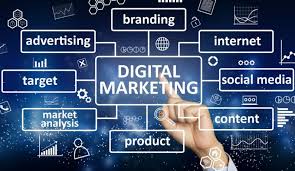
The integration of Artificial Intelligence in digital marketing is fundamentally rewriting the playbook for how brands interact with their audiences. The shift is moving the industry away from traditional, broad-based “spray and pray” tactics toward a model of hyper-personalization at scale.
This transformation is not merely about increasing the speed of output; it is about elevating every stage of the marketing funnel, from initial awareness to long-term advocacy.
The current state of the industry reflects a massive valuation for AI in marketing, estimated at $47.32 billion in 2025, which represents a nearly 400% increase from 2020 figures. This growth is fueled by the necessity of processing consumer data that has become too vast and complex for human analysis alone. AI models now process consumer behavior patterns to enable real-time adjustments to the user experience. For example, platforms can now learn about visitors’ preferences—what they click on and how they behave—to customize the digital environment instantly, a process often referred to as “dynamic yield”.
Furthermore, the operational culture within marketing agencies is shifting toward a “human-plus-machine” collaboration model. Instead of viewing technology as a replacement, high-performing organizations view it as a catalyst for innovation. Statistics suggest that companies using AI across their operations pivot approximately 75% of their staff’s work from production-heavy tasks to more strategic, high-level activities. This allows marketers to steer the vision and tone while the AI handles the “heavy lifting” of data analysis and asset generation.
The integration of Artificial Intelligence in digital marketing is fundamentally rewriting the playbook for how brands interact with their audiences. The shift is moving the industry away from traditional, broad-based “spray and pray” tactics toward a model of hyper-personalization at scale. This transformation is not merely about increasing the speed of output; it is about elevating every stage of the marketing funnel, from initial awareness to long-term advocacy.
The current state of the industry reflects a massive valuation for AI in marketing, estimated at $47.32 billion in 2025, which represents a nearly 400% increase from 2020 figures. This growth is fueled by the necessity of processing consumer data that has become too vast and complex for human analysis alone. AI models now process consumer behavior patterns to enable real-time adjustments to the user experience. For example, platforms can now learn about visitors’ preferences—what they click on and how they behave—to customize the digital environment instantly, a process often referred to as “dynamic yield”.
Furthermore, the operational culture within marketing agencies is shifting toward a “human-plus-machine” collaboration model. Instead of viewing technology as a replacement, high-performing organizations view it as a catalyst for innovation. Statistics suggest that companies using AI across their operations pivot approximately 75% of their staff’s work from production-heavy tasks to more strategic, high-level activities. This allows marketers to steer the vision and tone while the AI handles the “heavy lifting” of data analysis and asset generation.
One of the most profound applications of Artificial Intelligence in digital marketing is the granular analysis of customer behavior. Traditional analytics could tell a marketer what happened on a website, but AI-driven tools explain how and why specific patterns are emerging. By utilizing machine learning algorithms, businesses can analyze past interactions, purchase histories, and behavioral patterns to generate real-time insights that were previously inaccessible.
These systems allow for real-time experience adjustments. Imagine an online retailer where the storefront adapts its layout based on whether a visitor has been browsing jackets or shoes. The AI identifies this intent and restructures the interface to minimize friction and maximize the likelihood of a conversion. This level of responsiveness extends to sentiment analysis, where AI scans social media and reviews to gauge the public’s emotional response to a brand, allowing for proactive reputation management
| Feature | Traditional Marketing | AI-Driven Marketing |
| Data Analysis | Manual, historical, and reactive. | Automated, real-time, and predictive. |
| Customer Support | Limited hours, human-dependent. | 24/7, instant, and context-aware. |
| Content Creation | Slow, high-cost, and manual. | Rapid, scalable, and optimized. |
| Targeting | Broad segments/demographics. | Individual-level hyper-personalization. |
| Lead Scoring | Subjective or rule-based. | Data-driven and behavioral-based. |
Artificial Intelligence in digital marketing is not merely a tool for execution; it is a catalyst for smarter strategic planning. By providing a “Strategic Intelligence” layer, AI analyzes industry landscapes, competitor content, and search trends faster than any human team could. This allows leadership to build more resilient business models and make informed choices that drive sustainable growth
Companies are now moving through stages of AI maturity, from pilot projects to full integration where AI is embedded across strategy and operations. A core component of this strategic shift is the “AI Readiness Assessment,” where businesses identify their performance gaps and map out which high-value applications of AI can solve their specific challenges.
Strategic AI integration allows for continuous testing and refinement. Instead of launching a campaign and waiting weeks for results, marketers use AI-optimized systems that adjust in real-time, effectively creating “autonomous campaigns” that require no manual pause button. This agility is essential in a competitive market where consumer trends can shift in days rather than months.
The decision-making process is enhanced by AI’s ability to turn massive amounts of raw data into “Actionable Insights”. Leaders use these insights to allocate resources to high-impact areas, reducing wasted ad spend and acquisition costs. Organizations that leverage AI for personalization typically see 15-25% increases in conversion rates and an 81% boost in overall sales performance.
Furthermore, AI-driven guidance provides sales staff with “playbooks” that suggest the next best step based on real-time data. For example, if an AI detects a prospect has visited a pricing page three times, it can prompt a sales representative to send a specific case study that addresses common pricing objections, thereby increasing the win rate.
For startups and small to mid-size businesses (SMBs), AI provides the ability to scale faster with fewer resources. Agility and scalability are key to thriving in competitive markets, and AI-driven automation handles the repetitive tasks that would otherwise require a large workforce. This “democratization of technology” allows small firms to act with the sophistication of a much larger corporation.
By utilizing cloud infrastructure and AI agents, businesses can expand their operations without heavy investment in physical assets. This operational efficiency is not just about cost-cutting; it is about “Innovation”. When teams are freed from the drudgery of data entry and basic reporting, they can focus on the creative breakthroughs that differentiate a brand in a crowded market.
Growth hacks in 2025 involve the strategic application of AI to solve specific business problems rapidly. For local and small businesses, these hacks provide a “secret weapon” to compete with national brands by leveraging speed and hyper-localization.
A significant growth hack in sales involves “Conversational Intelligence.” By recording and transcribing sales calls, AI can extract patterns that human managers might miss. For instance, data shows that the optimal talk-to-listen ratio in a successful sales call is 43:57. Marketers can use these insights to coach their teams and refine their messaging in real-time.
Another hack is “Signal-Based Prospecting,” where AI triggers an outreach sequence the moment a prospect shows high-intent behavior. If a local homeowner searches for “emergency plumber near me” and lands on a site, an AI system can instantly notify the business owner or trigger a chatbot to offer immediate booking, capturing the lead before they move to a competitor.
Lorem ipsum dolor sit amet, consect etur adi pisicing elit sed do eiusmod.